
Artist Rosie Isaac reports on her time as one of our 2026 Paris Arts Fellows.
All photographs by Rosie Isaac.
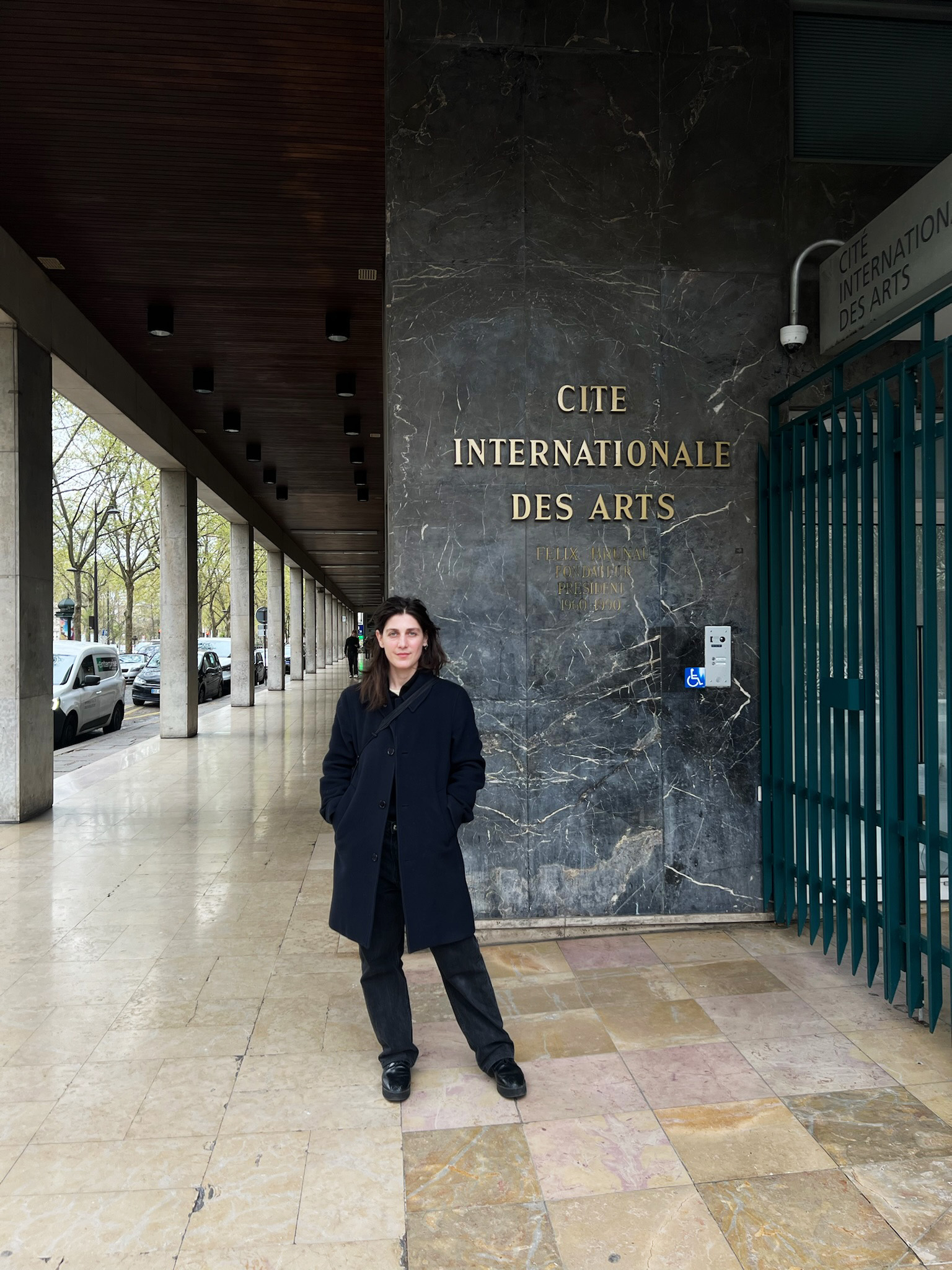
Read below a report from Rosie Isaac, who was a resident at the Power Institute's studio at the Cité Internationale des Arts in Paris from January to March 2026.
The Power Institute is deeply grateful to Nicholas Curtis AM and Angela Curtis for their generous philanthropic support of the Nicholas and Angela Curtis Cité Internationale des Arts Residency Fellowships and Virginia Spate Research Fellowships, which provide transformative opportunities for Australian artists and researchers to engage with Paris’s vibrant cultural community.
More information about the Paris Art Fellowships
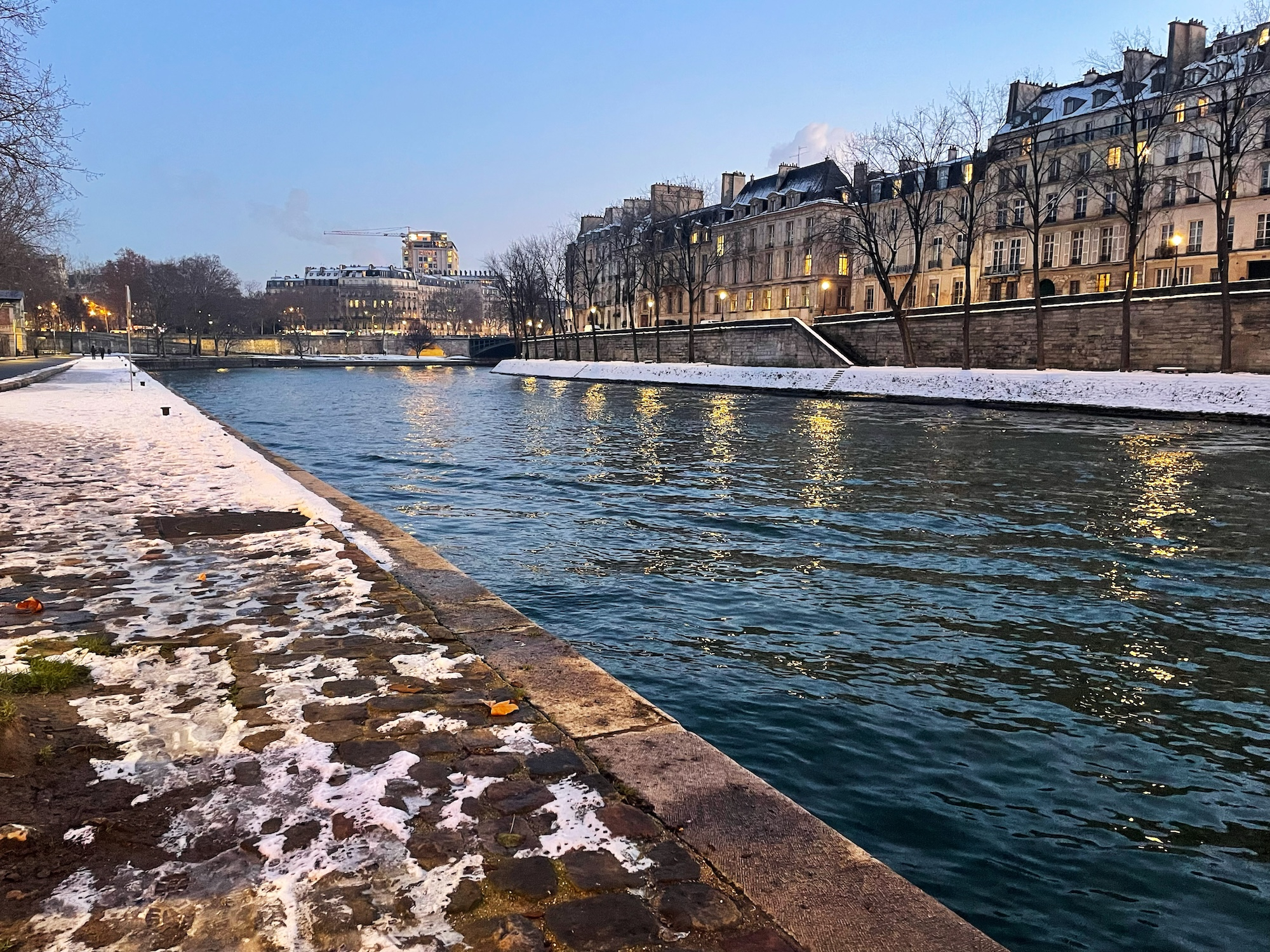
When I arrived, Paris was under snow. An unusual cold snap had blanketed the city so that the ground, the trees, the tents of the men living below the Cité and the tops of cars were blanketed for the first few days. I filmed the view from my window at night as snow whipped past the yellow street lamp and settled beautifully onto a truck below. This was the first of many impulses that I followed during the residency. Spending three months far from my world produced an openness in my process. I took cues from what was in front of me, making decisions not only with my head but more and more with some other combination of organs.
I began my research at the Paris Observatory, spending time in the archives with 18th century scientific texts and diagrams relating to the recording of the transit of Venus in 1761/69. This archival research was the core of my proposal to think (and make) about these events as exemplars of the deep entanglement between science, measurement and colonialism.
My project walked, as they tend to do, away from the clear, linear research, following tangents. I started reading weather records for the day of the transit in the 18th century, and writing my own. My interest in measurement slipped from the metre towards time.
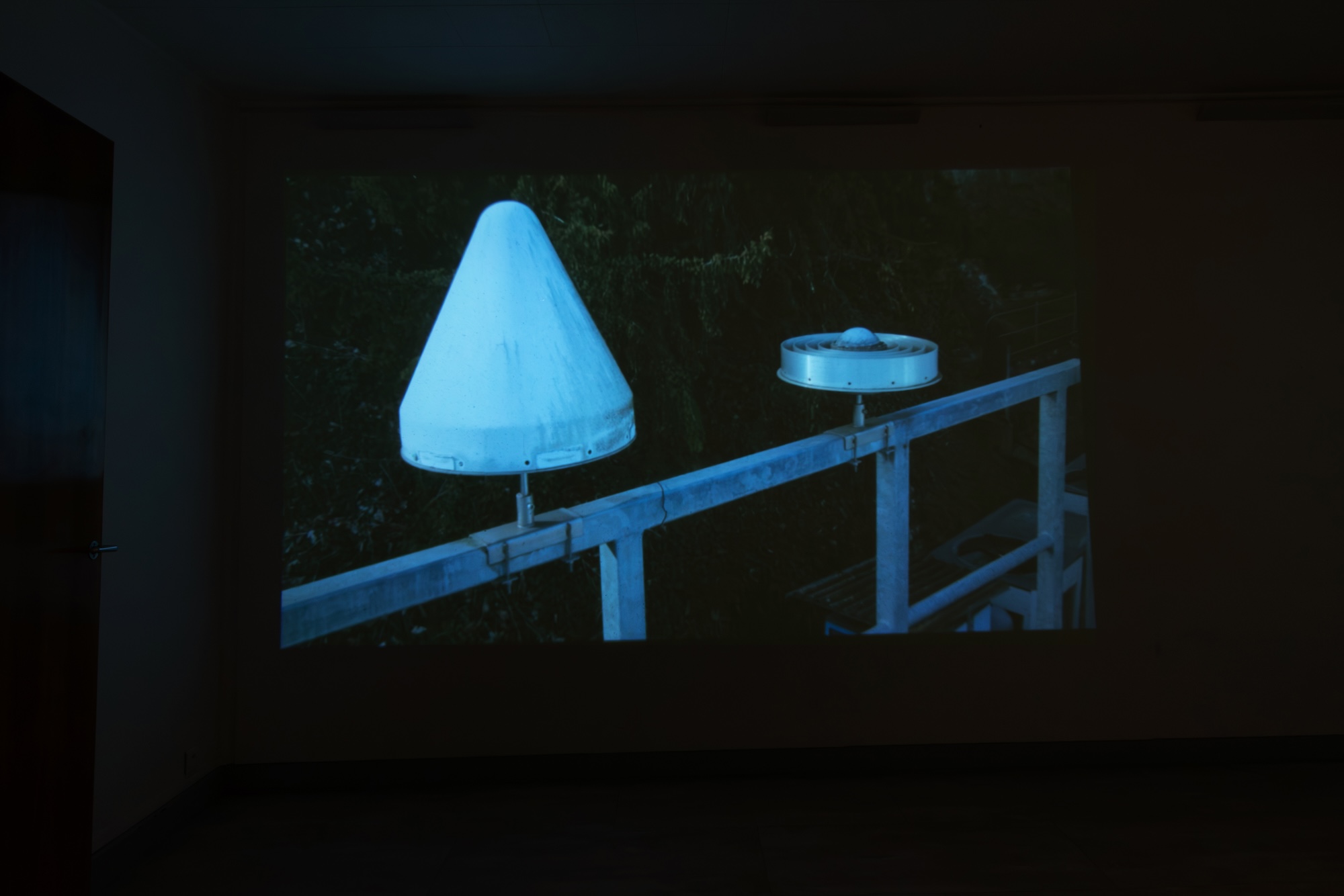
While visiting the archive I filmed on my lunch breaks. Static shots of architecture designed and built at various points between 1660 and (I’d say) the 1960s for measuring the stars, planets, and weather. The Paris winter sky was often so white and windless that it was hard to know if I was making a moving or still image. I wrote (science) fiction and poems about an alien that lived in this quiet landscape. I can only explain this as some combination of the eerie stillness and the weather reports as portals in time.
One day while filming, a scientist approached me, interested in what I was doing. He was enthusiastic to share information about the buildings, some of which escaped my French comprehension. Later, while watching the footage, I heard our conversation again and his meaning became clear. Below this old domed building were the atomic clocks used to produce French legal time.
Equipped with this information I organised to visit and then to film these precision clocks and the scientists who maintain them. I visited Dr. Patrizia Tavella, Director of the Time Department at the Bureau des Poids et Measures (the international organisation responsible for the definition of the Standard Units). This research and filming will be used to make a new video work that unravels some of the relationships between the measurement of the second and relationships to a more intimate understanding of historical time.
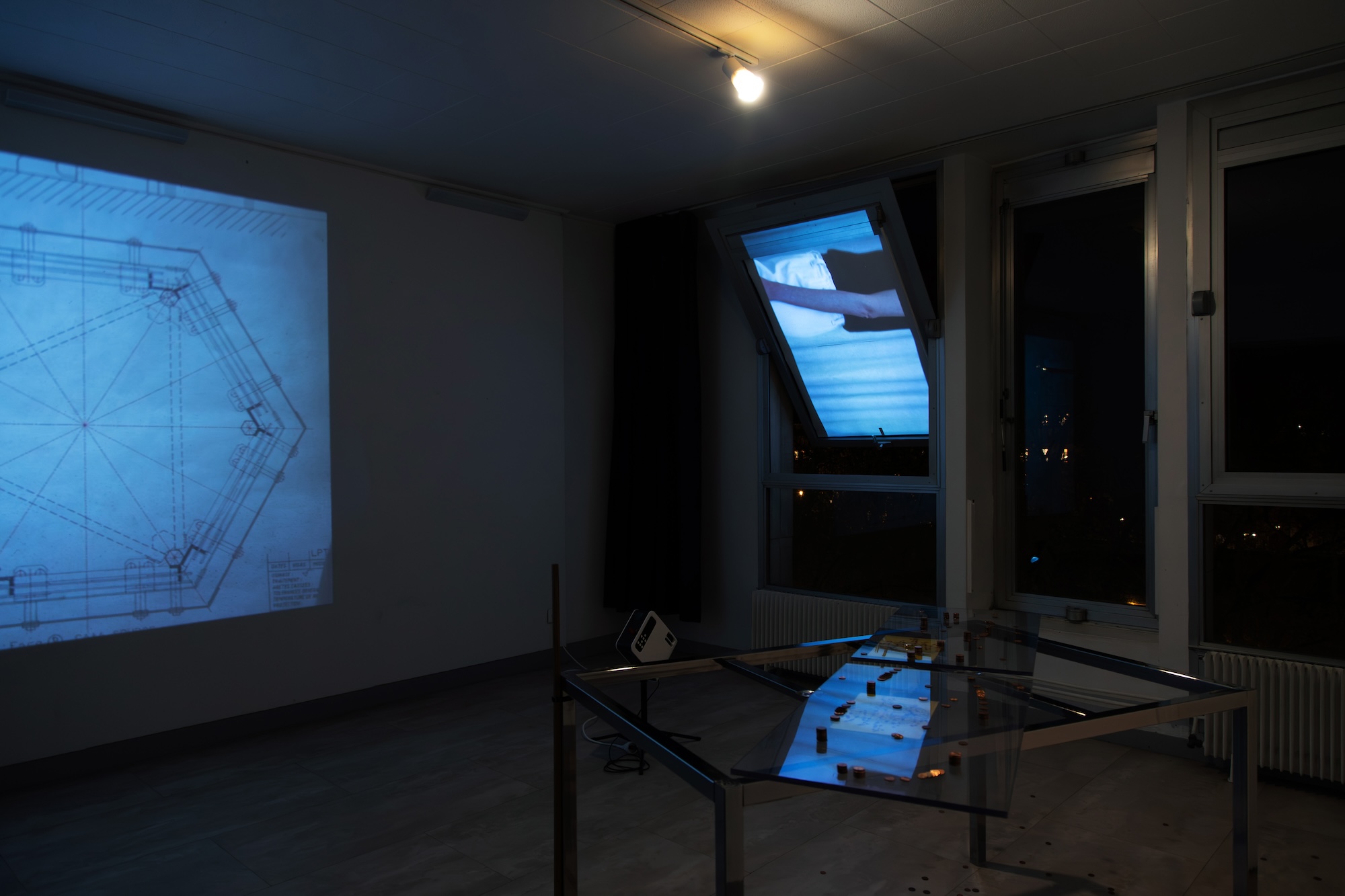
In the final week of my residency I held an open studio at the Cité. I showed test edits of the video on time and a video I made in collaboration with two dancers who were also in the residency program. This work is a continuous 360-degree shot of the dancers turning in orbit around the camera. Shot in real time the combined motion of my camera and the dancers produces a sense of slowness, as if time is being dragged along.
People

Rosie Isaac
Rosie Isaac (b. Naarm/Melbourne, 1990) is an artist with a research-based sculpture, writing, video and performance practice. Rosie is interested in artmaking as a form of attention to material, social and linguistic systems. Her recent projects have looked at waste, soil chemistry, the law, libraries and reading. Rosie has shown work across the National Gallery of Victoria, West Space, Conduction, Liquid Architecture, Next Wave and Gertrude Contemporary among others. She is a sessional academic at MADA, Monash University.