
Art History and the Cultural Character of War
A lecture on architecture and urban planning as central to the Nazi military occupation of Europe. An event to mark Paul B. Jaskot's new book, "The Tyranny of the Object: An Introduction to the Barbarism of Art History", published by Power Publications.
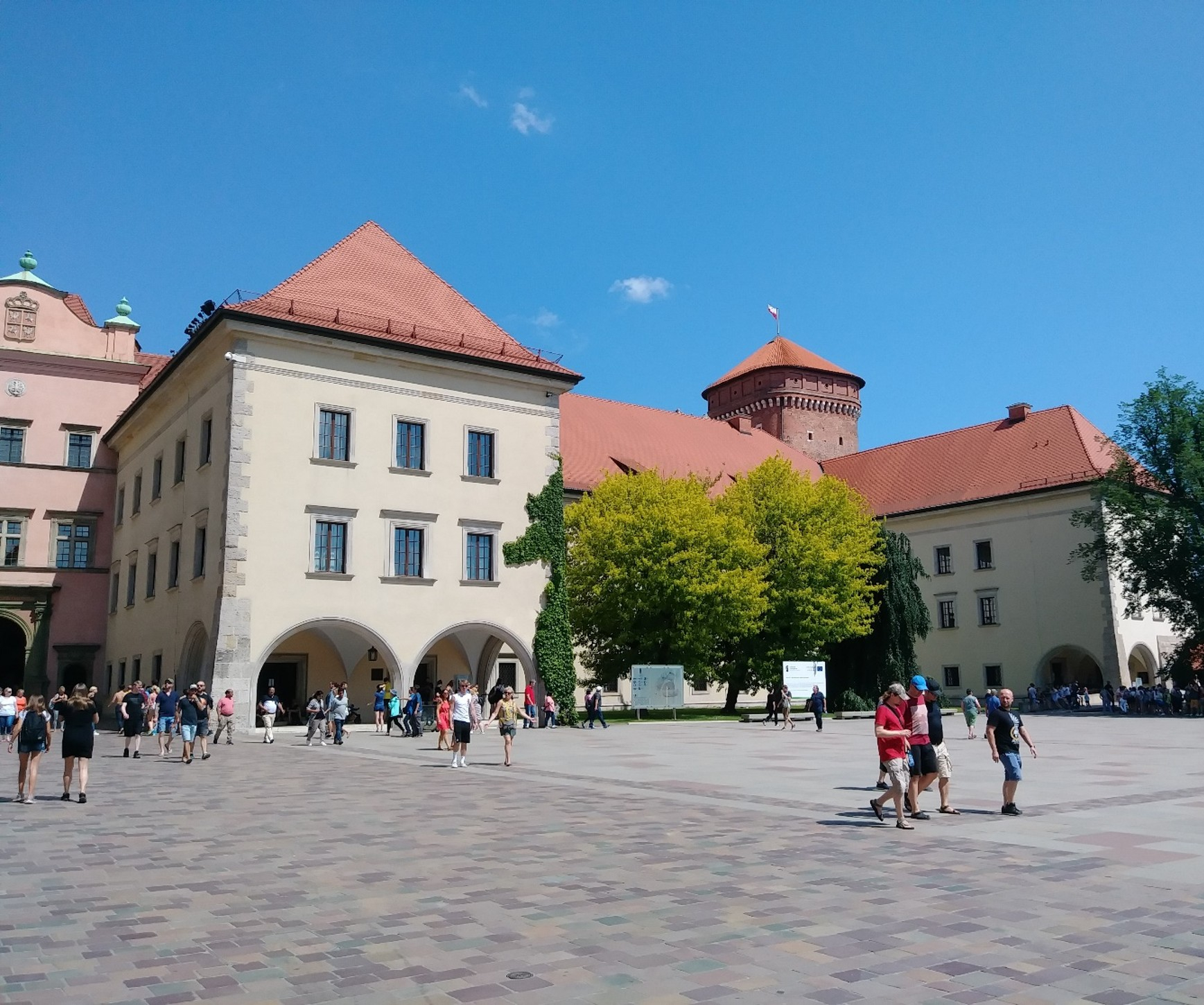
Nazi-era administrative building at the Wawel, Kraków, 1941-44. Photography by Paul B. Jaskot, 2019.
Architecture is essential to the waging of war. To understand why, this talk considers the dynamic relationship between materials, labour, and construction, looking particularly at World War II and the Nazi occupation of Eastern Europe.
In the 19th and 20th centuries, European architects and engineers experimented with new technologies like cement, which they carried into the Nazi period and developed further during World War II. Exploring this history helps to distil which cultural ideas and values influenced the systemic political economy of Europe under Nazi occupation and, indeed, became central to the most nefarious plans of the Holocaust itself.
The tendency of art history to focus on individual objects has kept us from a systemic analysis of culture’s broader active contribution to war. Instead of looking at just one building, this talk will look at many, from simple industrial vernacular structures to the most refined designs. This type of art history has something important to say about the key terms of a military conflagration, and clarifies the grotesquely human dimensions of this most destructive and racist war.
Please note that this lecture addresses some difficult themes and histories, and interested parties should consider how this may affect them prior to registration and attendance.
This event celebrates Paul Jaskot's new book, "The Tyranny of the Object: An Introduction to the Barbarism of Art History", published by Power Publications.
Learn more about and pre-order the book
People

Paul B. Jaskot
Paul B. Jaskot is the France Family Distinguished Professor of Art, Art History & Visual Studies at Duke University, as well as the Director of the University's Digital Art History & Visual Culture Research Lab. His scholarship focuses on National Socialist cultural policy and its postwar impact. His books include The Architecture of Oppression: SS, Forced Labour, and the Nazi Monumental Building Economy, The Nazi Perpetrator: Postwar German Art and the Politics of the Right, as well as New Approaches to an Integrated History of the Holocaust: Social History, Representation, Theory (co-edited). He is a founding member of the international Holocaust Geographies Collaborative. He was the Andrew W. Mellon Professor in the Centre for Advanced Study in the Visual Arts 2014-16 (National Gallery of Art, Washington, DC) and the Ina Levine Invitational Scholar in the Mandel Centre for Advanced Holocaust Studies 2020-21 (US Holocaust Memorial Museum, Washington, DC).