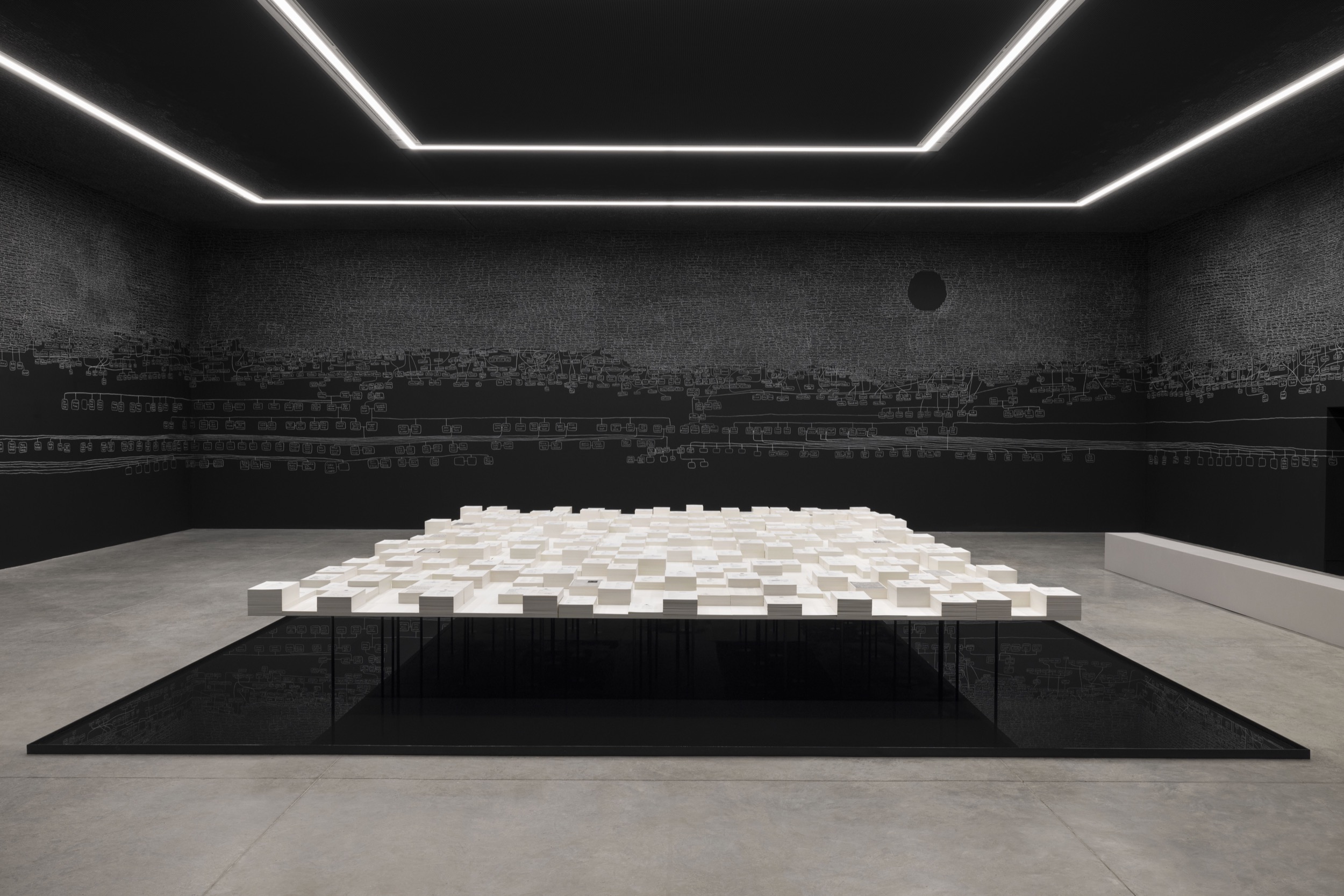
Visual allegories of seeing as knowing
A lecture about Piero Della Francesca's painting of St Augustine, Giorgione, and Plato’s Allegory of the cave. Part One of Professor Terry Smith's lecture series, "Visions, bodies, shadows, worlds".
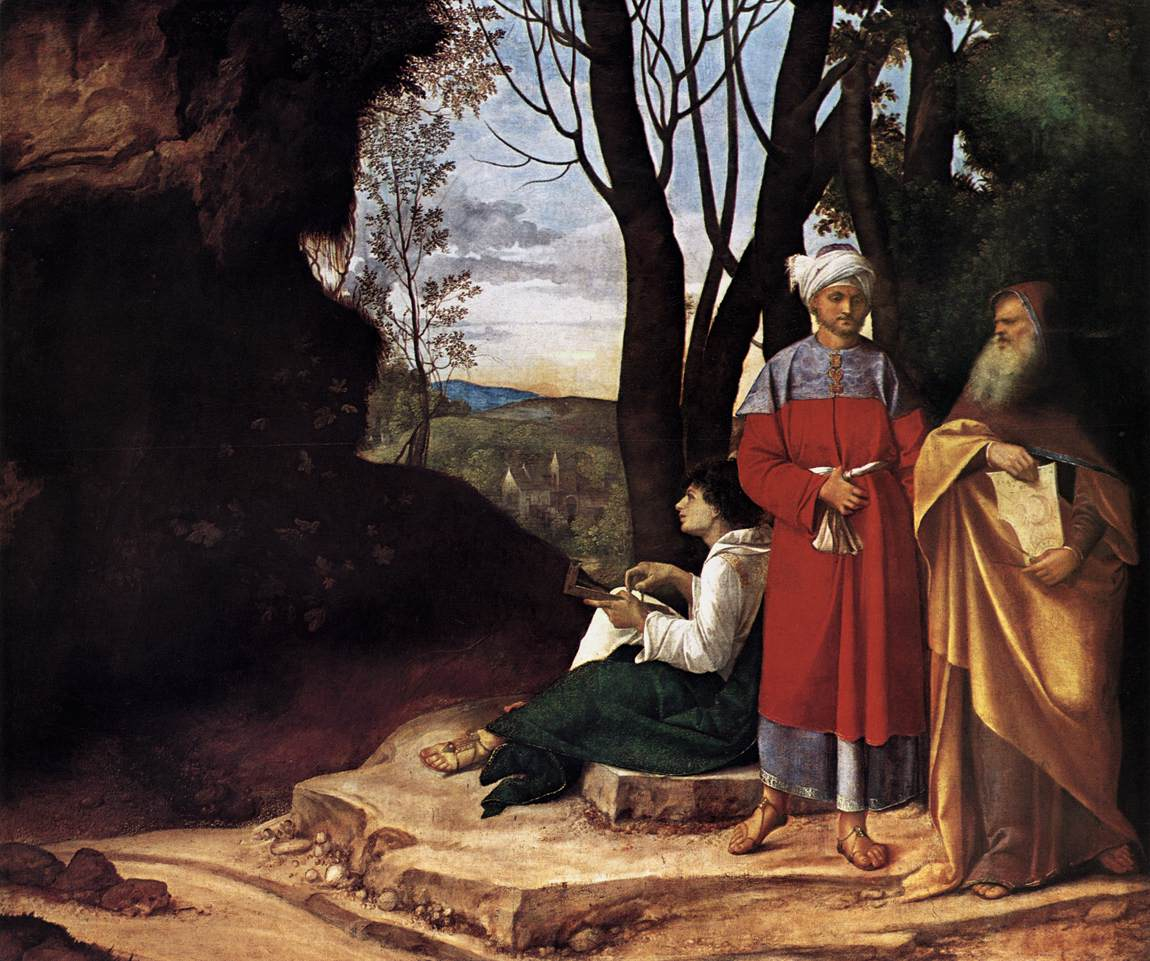
Giorgione, The Three Philosophers, 1505-9, oil on canvas, 48 x 57 inches, Kunsthistorisches Museum, Vienna.
How might a painting think about thinking?
Since the Renaissance in Italy, several artists have taken up Plato’s Allegory of the Cave, as pictured by Socrates in Book VII of The Republic (written around 350 BC), as a way to do so. The Allegory is the most famous evocation within Western thought of what it is to know the world through seeing it in various ways.
The first half of this lecture will focus on Giorgione’s The Three Philosophers, painted in Venice around 1505. It suggests that, in the allusive, poetic manner that is characteristic of his art, Giorgione embeds Platonic rationality within several other ways of seeing and knowing the world. What kinds of time are made visible in works of art? How do visual artists evoke the experience of traveling between one or more times and places?
The second part of this lecture asks whether—while he was painting (sometime between 1454 and 1469) the figure of St Augustine on a panel within the altarpiece of a church in Sansepolcro dedicated to the saint—Piero della Francesca might have imagined himself in dialogue with the saint’s thoughts on the nature of time, famously set out in The Confessions, written in 379 CE, more than one thousand years earlier. This conceit highlights Piero’s distinctive ability to present several kinds of time in the same, single work, in a manner that seems, at once, calmly settled and forever ethereal, at home with both human temporality and spiritual eternality, at what seems (to us, standing in front of his paintings) to be the same time.
Presented in partnership with the Art Gallery of NSW.
People
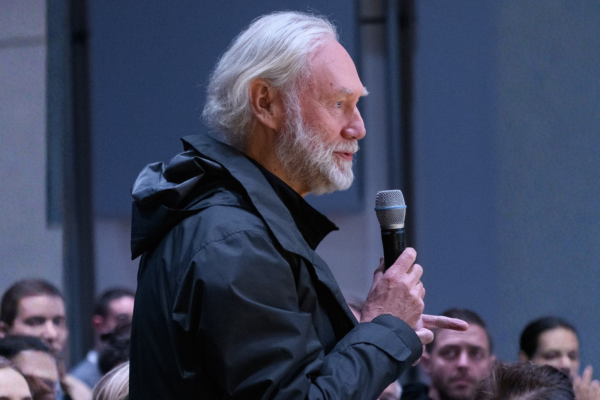
Terry Smith
Terry Smith is Emeritus Professor of Art History at the University of Sydney and Andrew W Mellon Emeritus Professor of Contemporary Art History and Theory in the Department of the History of Art and Architecture at the University of Pittsburgh.
He is the author of numerous books on contemporary art and curatorial practice, most recently Curating the complex and the open strike (2021), Iconomy: towards a political economy of images (2022), Fred R Myers, Six paintings from Papunya: a conversation (2024) and the edited volume Okwui Enwezor: selected writings (2025).
A founding board member of the Museum of Contemporary Art Australia, he has served on the board of the Andy Warhol Museum, Pittsburgh, and is Board Member Emeritus of the Carnegie Museum of Art, Pittsburgh.
Photograph: Filip Wolak
Related
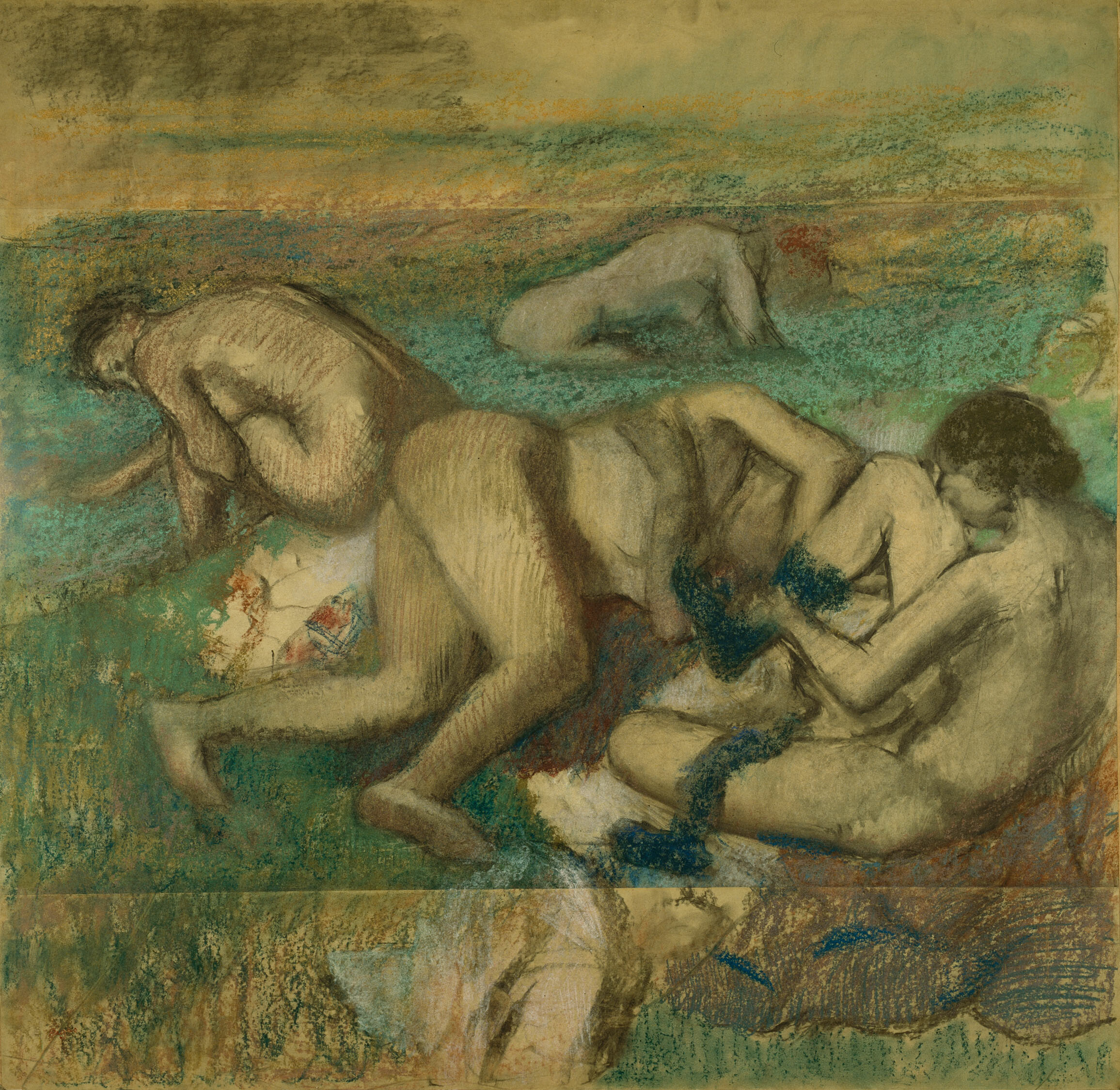
Tue, 11 August 2026
11:00AM
Bodies as mediums of modernity
Terry Smith
Tue, 18 August 2026
11:00AM
Modalities of Everywhen
Terry Smith